
Digital Circus Episodes Reviews Highlights and Episode Guides for Viewers
Suggested approach: Launch with Season 1, indie series directory, indieserials platform Episode 3 (approximately 11 minutes).
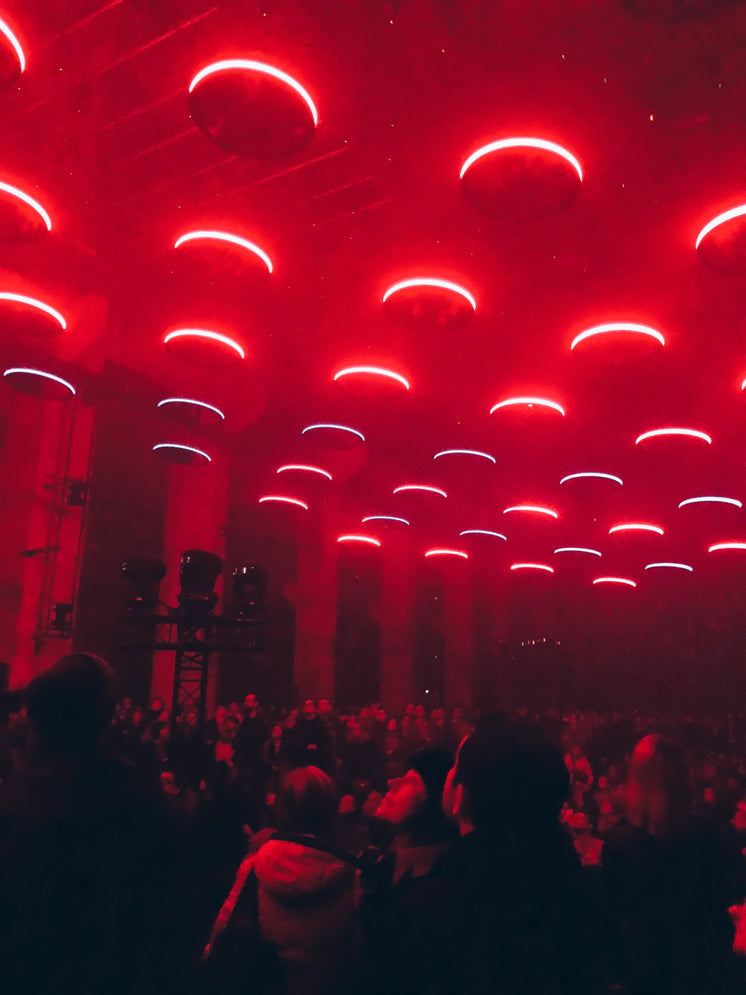
This installment offers a focused emotional payoff, introduces protagonist Mira, reveals a villain shift, sets the visual color scheme, and establishes distinctive sound patterns.
If you have limited time, watch episode 3 of season 1 first, then episode 1 for contextual origin.
Season one comprises 10 brief episodes; durations span 9 to 14 minutes.
Premiere date: September 2023; platform: Netflix.
Average user ratings: 7.8/10 on IMDb, 89% audience approval on Rotten Tomatoes.
Production insights: episodic structure emphasizes rapid recurring rhythms, numerous visual jokes, and layered environmental details that benefit from repeated viewing.
Viewing recommendations: Utilize headphones to catch bass-heavy audio elements;
activate captions for fast-paced conversation;
pause at minute 6:12 in S1E3 to analyze an important visual moment.
For stronger character insight, focus on Mira arcs across S1E3, S1E6, S1E9;
record timestamps for persistent motifs: 00:45, 04:32, 10:58.
Conclusion: For viewers short on time, allocate two 12-minute slots to cover core themes;
for audiences seeking fuller context, schedule an immersive 30-minute block concentrating on episode 3 of season 1 plus connected segments for story connections.
Digital Circus Deconstructed: What Makes It Special?
Begin with the first episode while utilizing English captions;
focus on character beats, visual callbacks, sound-design cues.
- Fused animation style: 3D figures with cel-shading, rapid shot changes, calculated frame omissions that mirror vintage slapstick pacing.
- Mood opposition: vibrant environment colors contrasted with disturbing conversation, recurring atmosphere changes within individual sequences.
- Duration: approximately 9–12 minutes per segment, streamlined storytelling focused on scene effectiveness.
- Sound design: soundtrack combines retro gaming melodies, impactful drums; silence functions as a rhythmic mechanism for releasing tension.
- Visual motifs: color-coded wardrobes, mirror imagery, recurring background glyphs reused across installments to signal continuity.
- Story structure: individual episode format conceals deeper connected storylines; hidden details compensate repeated watching and concentrated examination.
- Developer markers: closing frames regularly include small indicators; official statements reveal production insights that validate or invalidate community assumptions.
Recommended viewing setup:
stereo headphones, fullscreen playback at native resolution;
turn on closed captions for lyric understanding and joke cadence.
- Replay significant moments at quarter speed to follow motion pacing;
- freeze on each frame to detect blur frames, rapid transitions, and recurring components.
- Segregate score recordings or instrumental versions to identify musical patterns across installments;
- log timestamps for cue recurrence.
- Assemble color ranges using frame capture utilities for each individual, contrast across installments to track tone variations.
- Inspect closing cards, platform descriptions, and caption documents for hidden language or timecodes that associate moments.
- Track authorized production accounts for backstage releases;
- development insights explain workflow decisions, software tools, and team member responsibilities.
Core uniqueness stems from synthesis of cheerful set design, tight pacing, meticulous audio work, layered continuity that rewards micro-analysis more than casual viewing.
The Conceptual Foundation of Digital Circus
Observe episodes one through three in original order to capture basic components, timing, and returning elements.
Average runtime 11 minutes per installment; pilot runs 22 minutes.
Segment durations fluctuate between 7 and 15 minutes across season one; bridge shorts last 1 to 3 minutes.
Recommended binge session: 4–5 installments per sitting to follow narrative arcs without fatigue;
take 10-minute breaks after every 45 minutes.
Production process integrates 3D character designs with 2D surface treatments; cel-shading and movement blur applied purposefully.
Usual frame rate runs at 24 fps for dramatic moments, 30 fps for fast-paced physical comedy.
Color grading shifts per chapter: warm tones for comedic scenes, desaturated palette for tense beats.
Audio composition uses electronic synth patterns associated with personalities; signature tunes return at 30–90 second frequencies to denote mood variations.
Conversation recorded at 48 kHz; final audio mixed to -6 dB LUFS for digital streaming services.
Plot architecture implements embedded realities: immediate jokes hide ongoing puzzle; every episode reveals one fact that changes earlier perspective.
Character arcs follow three-act micro-structure within single installment: setup, subversion, payoff.
Major concentration on outcomes: decisions cause continuing transformations to the collective environment across numerous segments.
Enable subtitles to catch visual puns embedded in caption files;
halt at specified timestamps noted in episode guides for detailed frame study.
Monitor repeating symbols using table with categories: time marker, icon, possible interpretation, and verification against producer observations.
For collectors: download available OST tracks at lossless 44.1 kHz when offered;
retain native display dimensions during storage to avoid animation irregularities.
Defining Qualities of Digital Circus Performances
Prioritise sub-100ms end-to-end latency: target 40 to 80 milliseconds between input and screen reaction for interactive sections;
assess round trip timing, encoding/decoding periods, and rendering delay distinctly.
Instantaneous visualization: employ Unreal Engine or Unity with activated hardware ray tracing and time-based resolution enhancement (DLSS or FSR) to maintain 4K resolution at 60 frames per second with sophisticated materials;
dedicate 6 to 8 milliseconds of graphics processor time per frame for main rendering, 2 to 4 milliseconds for after-effects.
Motion capture standards: body suits with inertial sensors like Xsens or Rokoko for unconstrained movement with typical position discrepancy of ±10–20 mm;
optical systems (Vicon, OptiTrack) for studio-grade tracking with error ±1–3mm;
record at 120–240Hz for smooth retargeting.
Acoustic design: utilize Ambisonics order-3 for spatial audio indicators, convolution reverb for location simulation, and audio middleware including FMOD or Wwise;
target audio-to-visual sync <10ms;
supply separate audio elements at 24-bit/48kHz and a supplementary mix for HDR footage.
Light-emitting diode volume and projection requirements: pixel spacing P1.9–P2.6 for intimate scenes, illumination 800–1,500 nits, refresh at 240 Hz, genlock with SMPTE timecode for sequence synchronization;
correct color fidelity with spectroradiometer devices and utilize per-unit color transformation matrices.
Interactivity stack: utilize WebRTC for input pathways under 100ms, WebSocket or MQTT for non-real-time communications;
server components: Node.js or Go for signaling, Redis for ephemeral state, and edge instances for user affinity;
plan symmetric 100Mbps network per active host when supporting multiple simultaneous streams.
Resource and color workflow: preserve visual effects passes as EXR (32-bit float), transport animated models using Alembic, use ACEScg for linear in-process coloring, and deliver Rec.709 SDR together with PQ HDR masters;
keep consistent color mapping throughout production and LED output.
Production and QA recommendations: distribute functions: realtime technical manager, motion tracking operator, audio supervisor, VFX designer, network architect;
run three full dress rehearsals with simulated load up to 200 concurrent users, log packet loss, jitter, frame drops;
tolerate transmission loss less than 0.5% and latency deviation below 20 ms for dependable performance.
Frequently Asked Questions
Describe Digital Circus — what is it and who made it?
Describe Digital Circus — what is it and who made it?
Digital Circus is an animated production following a group of eccentric individuals isolated in a surreal entertainment arena.
The tone mixes fast-paced comedy, visual gags and occasional darker comedy beats, with short episodes that emphasize timing and character quirks.
The series was produced by a limited creative staff at an independent animation facility, blending traditional drawn facial expressions with digital effects to craft its characteristic aesthetic.
What is the episode structure — self-contained or serialized?
Most installments serve as separate comedic segments centered on one event or humor piece, allowing flexible viewing order.
Additionally, returning character trajectories and continuous comedy elements accumulate across the series, so those who view each installment will recognize deeper narrative growth and connections.
Writers often use brief flashbacks and short connective scenes to build continuity without turning each episode into a heavy plot installment.
Which episodes should I watch first if I’m new to the show, and why do they work as introductions?
Commence with the debut installment: it establishes the foundation, introduces the principal figures, and displays the series’ character in a compact delivery.
Following that, see an episode centered on the central figure’s origins or earliest major misstep — these parts provide emotional context and improve later humor reception.
I further recommend an installment with significant music content and one displaying the collective cast collectively;
the first illustrates the program’s inventive application of audio and rhythm, while the second reveals how varied characters engage under stress.
Ultimately, see the season’s central episode that combines several brief story elements;
it provides a solid understanding of the series’ storytelling goals without demanding knowledge of every preceding element.
How do the animated approach and audio craftsmanship strengthen the story?
The visual approach pairs exaggerated character animation with compact, detailed backgrounds so that motion and facial expressions carry much of the comedy.
Color selections and illumination transitions indicate emotional shifts, ranging from vivid, chaotic segments to darker, more confined scenarios.
Audio creation is notably intentional: distinct sound effects accent shock moments, and the soundtrack transitions between energetic compositions and subdued layers to synchronize with pace.
Vocal guidance maintains energetic deliveries, which assists brief episodes in achieving emotional resonance despite their short duration.
Is Digital Circus suitable for children, or is it aimed at an older audience?
The series works across two tiers.
At a basic level, it features slapstick and sight gags that entertain children, yet the scripts further contain ironic references, humor about the medium itself, and moral complexity that engage older youth and adults.
Parents should note the presence of occasional darker humor and mild strong language;
reference episode listings if you intend to vet individual installments first.
Ultimately, the program is most satisfying for audiences who value multi-level humor that can be appreciated differently across age groups.